Castlevania: Belmont’s Curse – How KONAMI and Evil Empire Reimagined Castlevania’s Return
Castlevania: Belmont’s Curse – How KONAMI and Evil Empire Reimagined Castlevania’s Return
It seems bizarre to say it, but there hasn’t been a brand-new Castlevania game for more than a decade and – for the series’ long-awaited return – KONAMI made a choice that may surprise some fans. It’s entrusting one of its most iconic franchises to French studio Evil Empire, best known for its work on Dead Cells, including the acclaimed Return to Castlevania DLC.
Set within the unique surroundings of the Chapelle Sainte-Jeanne-d’Arc in Paris’ 14th arrondissement, members of the press were invited for a first hands-on look at Castlevania: Belmont’s Curse. The venue proved particularly fitting, as the game itself opens in a dark, gothic interpretation of the French capital. Following our preview session, we sat down with Tsutomu Taniguchi (Producer at KONAMI) and Emmanuel Nouaille (Creative Director at Evil Empire) to discuss how this new chapter in the Castlevania saga came to life.
A Collaboration That Started as a Tribute
Before Belmont’s Curse, Evil Empire had already collaborated with KONAMI on Return to Castlevania, the celebrated Dead Cells DLC. At the time, nothing suggested that this partnership would eventually lead to the development of a brand-new entry in the Castlevania series.
According to Tsutomu Taniguchi, KONAMI’s decision to continue working with the French studio came down to two key factors: “The first is Evil Empire’s passion for Castlevania. The second is their expertise in action games. Castlevania has always been an action series, so it was essential that the controls, gameplay, and overall feel lived up to players’ expectations.”
Beyond their passion for the franchise, KONAMI was looking for a team capable of understanding what defines Castlevania while also mastering the demands of modern action game design.
Emmanuel Nouaille, however, receives those compliments with humility. Smiling, he admits it almost feels presumptuous to answer after Taniguchi’s praise before summarizing what, in his view, ultimately made the difference: “Our best résumé was simply our work.”
Originally, Evil Empire had only proposed creating a DLC as a tribute to Castlevania. It was through ongoing conversations with KONAMI that the collaboration gradually evolved into something far more ambitious.
Beyond the studio’s technical expertise, the partnership also allowed both teams to build a strong relationship of trust. With Return to Castlevania developing under particularly positive circumstances, working together again on a larger project became the natural next step.
Nouaille illustrates that trust with a memorable anecdote: “When we finished the DLC, Tsutomu Taniguchi visited the studio to play it. As he explored the castle, he discovered several details and Easter eggs he hadn’t noticed before. Then he simply turned around and gave us a thumbs up.” A simple gesture—but one that left a lasting impression on the team.
For Nouaille, that was probably the moment he realized this collaboration could become much more than a one-off.
Defining What Castlevania Is
For Taniguchi and Nouaille alike, everything began with the same question: What truly makes a Castlevania game? It sounds like an obvious question. Yet bringing back one of KONAMI’s most iconic franchises proved far more complex than it first appeared.
As Nouaille explains: “Castlevania means something different to everyone. We all grew up with different games, different characters, and different memories. Before we could build a new game, we first had to agree on the core pillars that define Castlevania.”
Taniguchi shares that perspective, explaining that every fan has a different relationship with the series. KONAMI’s role was therefore to establish a common creative framework—one that would preserve Castlevania’s identity while giving Evil Empire the freedom to express its own vision.
Before introducing a new protagonist, a new story, or new gameplay systems, both teams focused on establishing those foundations. The game had to remain a 2D action-exploration experience, fit within the official Castlevania canon, and keep the Vampire Killer whip at the heart of its gameplay. Once those principles had been agreed upon, KONAMI deliberately gave the French studio considerable creative freedom.
That freedom, however, was never a blank check. As Nouaille explains, modernizing Castlevania never meant turning its back on the franchise’s legacy. Every new idea had to grow from one of the series’ defining pillars before being adapted to the expectations of today’s players.
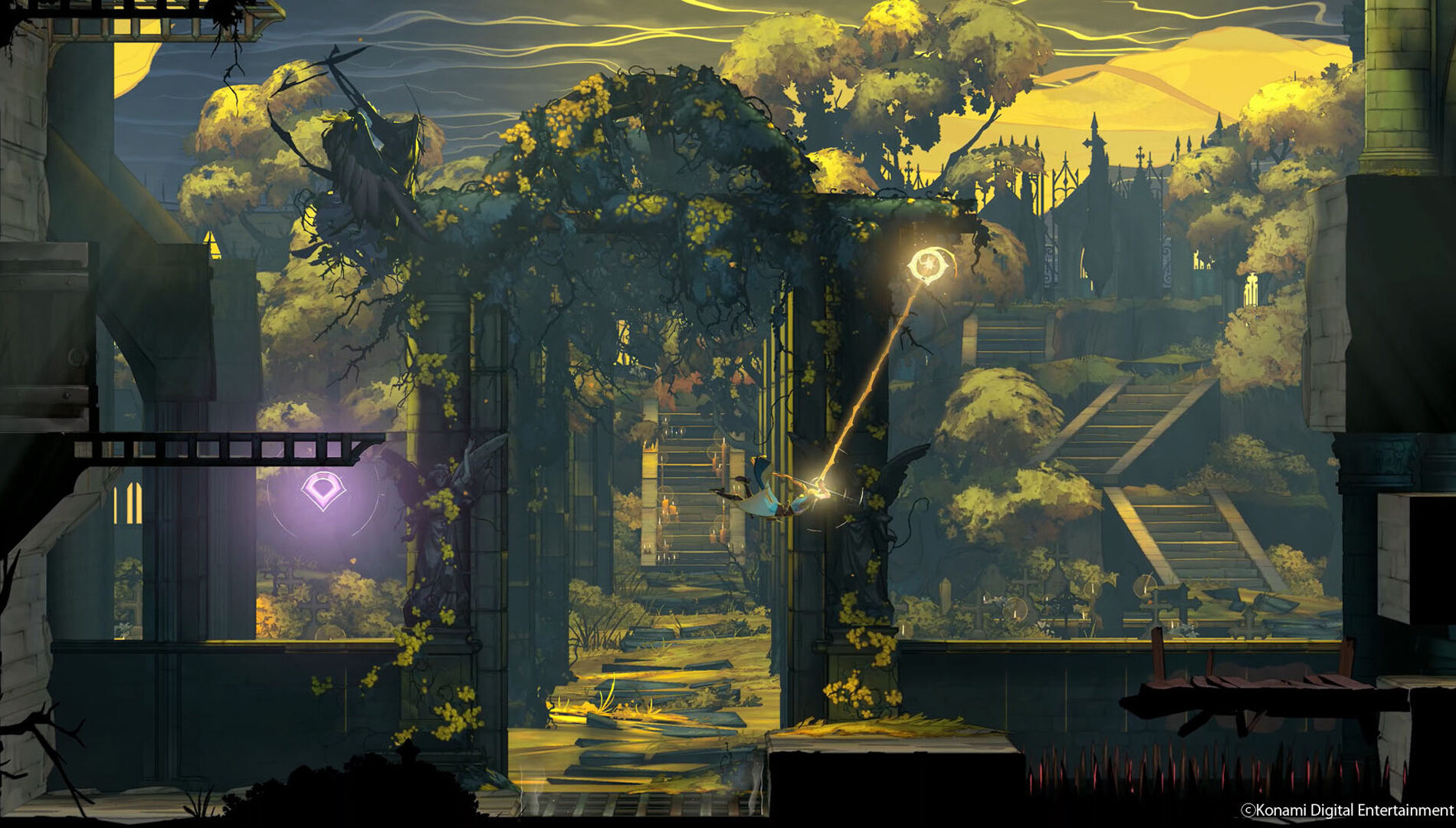
The whip is perhaps the clearest example. As one of Castlevania’s most iconic symbols, it was a non-negotiable element. Rather than reinventing it, Evil Empire chose to expand its role in both combat and traversal. The goal was to make players feel like agile, powerful vampire hunters capable of using the whip as naturally to move through the world as they do to defeat their enemies.
The same philosophy shaped the game’s overall pacing. The team wanted a faster, more energetic adventure while making exploration more demanding through traps, environmental hazards, and increasingly creative uses of the whip. Modernizing Castlevania was never about simplifying its gameplay—it was about expanding the player’s possibilities while preserving the sense of progression that has always defined the series.
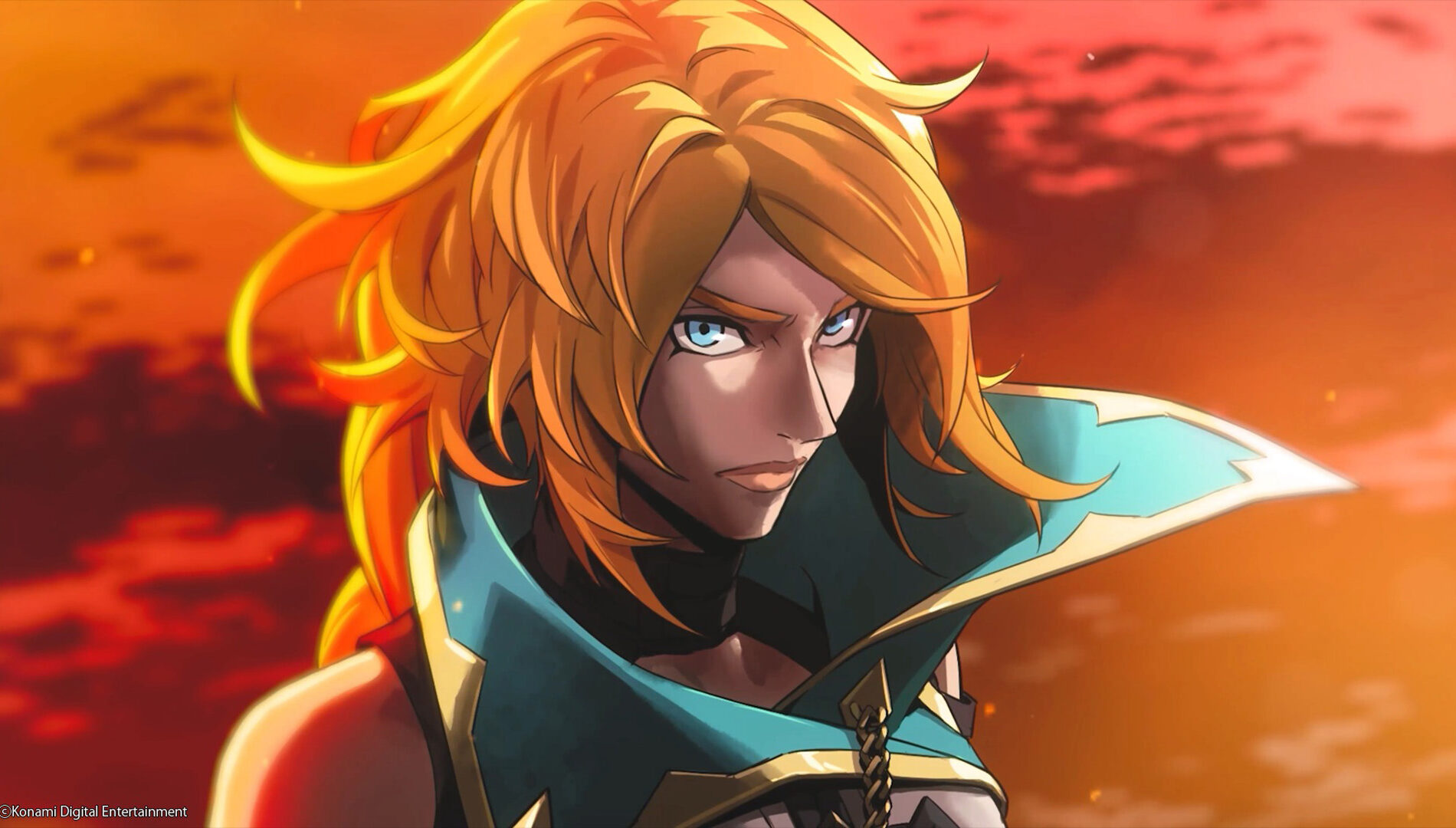
That same approach extends to the narrative. While continuing the story after Dracula’s Curse and Curse of Darkness, Belmont’s Curse also introduces a brand-new heroine, Rose, who naturally finds her place within the established Castlevania universe. She’s an extension of the lore, not a random offshoot from it.
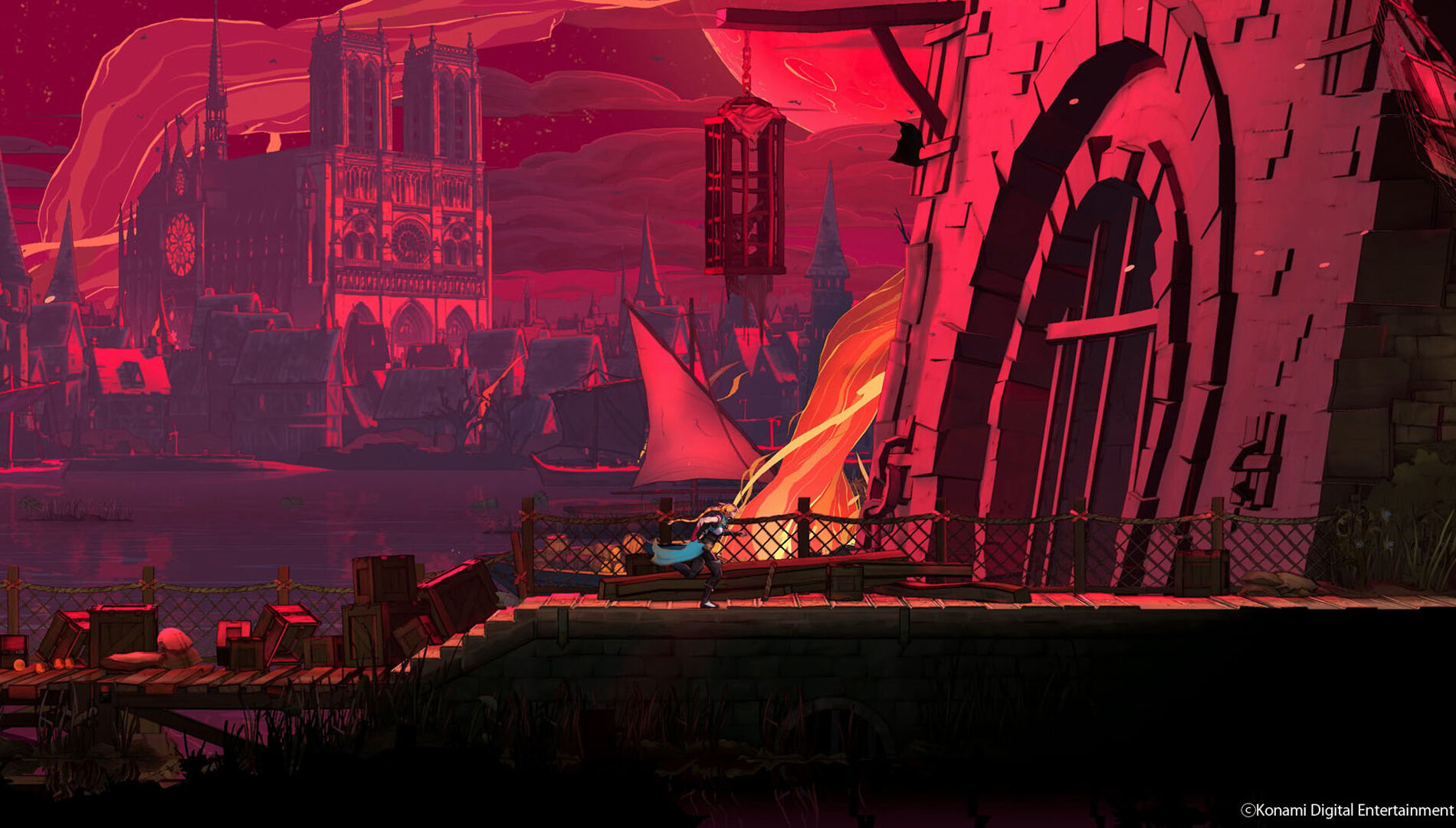
Working within this framework, Evil Empire was able to bring its own sensibilities to the project by setting the adventure in Paris and enriching its world with numerous historical references. More than a licensed production, Belmont’s Curse became the result of an ongoing dialogue between KONAMI and the French studio. As Nouaille puts it, “This wasn’t a work-for-hire project. It was a genuine creative collaboration.”
A Philosophy Felt from the First Minutes
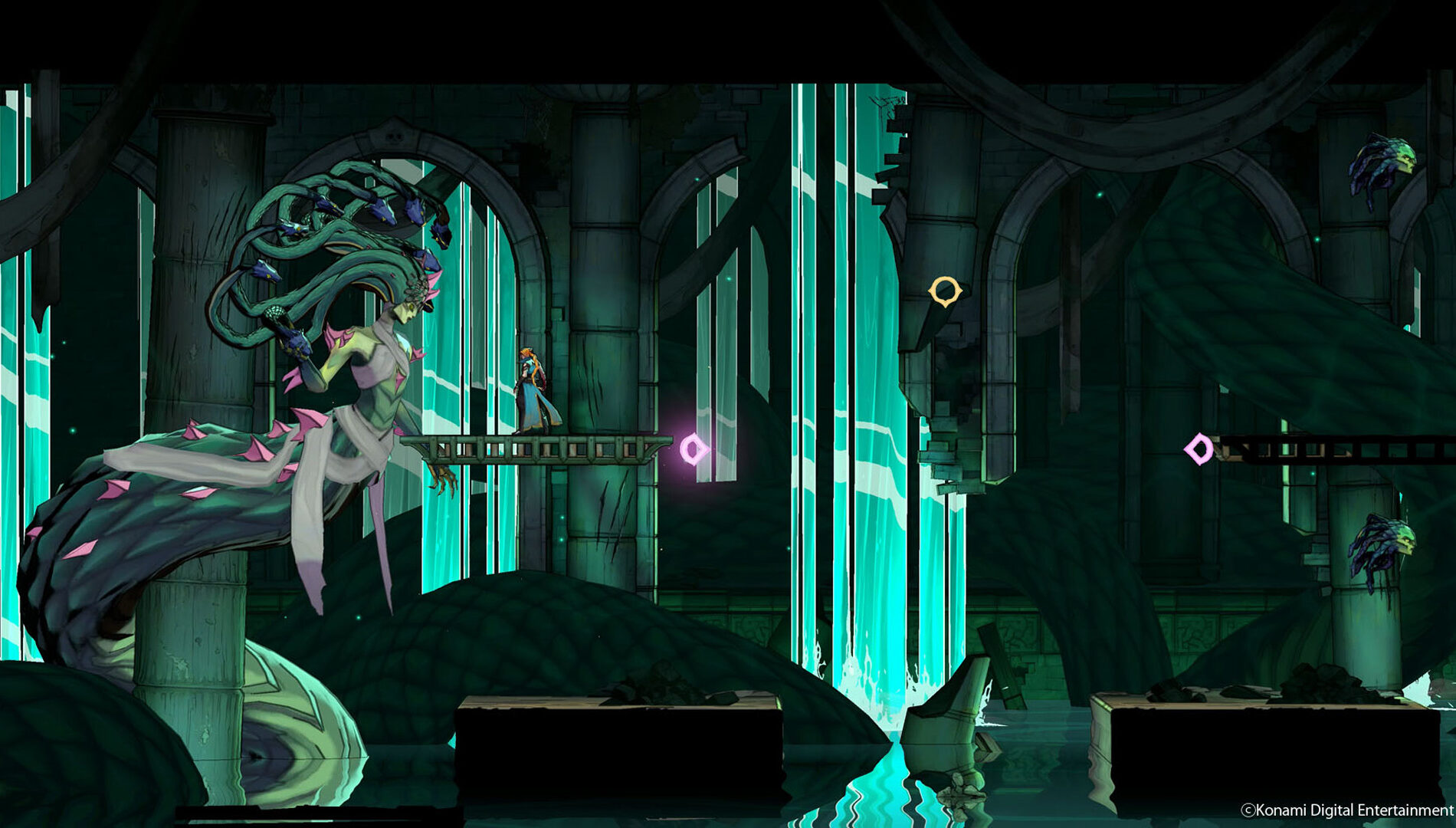
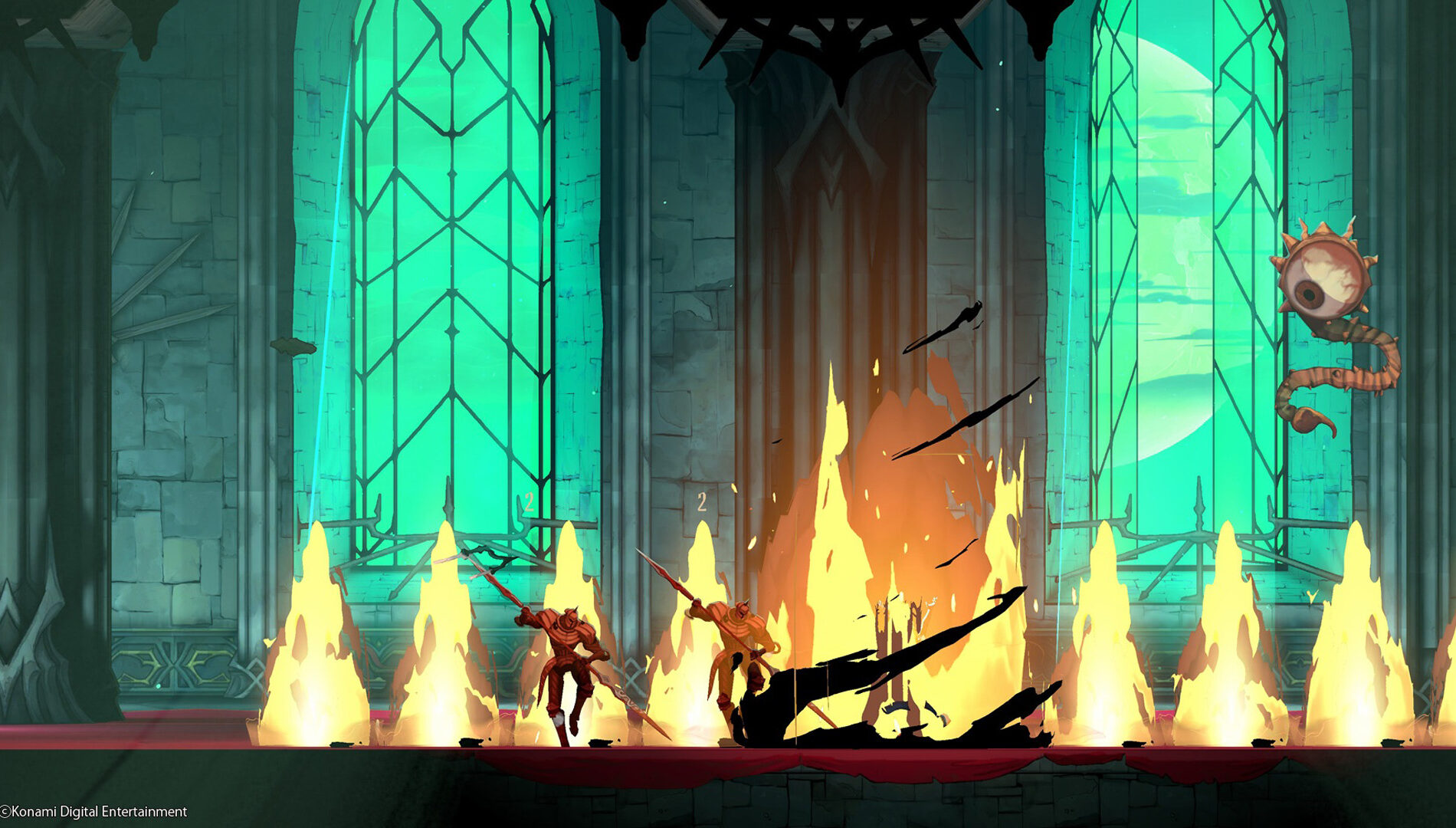
All of those creative decisions quickly become apparent once the controller is in your hands. Rather than simply updating the formula, Belmont’s Curse aims to evolve the series’ gameplay while preserving the foundations that have defined Castlevania for decades. Character animations, visual effects, sound design, and the impact of every attack all contribute to making combat feel more dynamic, readable, and satisfying without ever losing the unmistakable identity of the franchise.
The whip’s versatility naturally encourages players to revisit previously explored areas in search of hidden paths while making movement feel considerably more fluid. Taniguchi confirms that expanding the whip’s role was one of the team’s primary goals: “The whip remains true to Castlevania’s identity, but we wanted to give it a new dimension.”
The decision to set the adventure in Paris also reinforces the game’s distinctive identity. During our hands-on session, landmarks such as Notre-Dame Cathedral and the Catacombs appeared alongside references to several French locations, helping create a setting that feels authentic rather than merely decorative.
Meanwhile, the balance between exploration and combat quickly feels intuitive, supported by a striking art direction, atmospheric soundtrack, and carefully crafted sound design that immediately evoke the unmistakable spirit of Castlevania.
A New Chapter, Not Just a Tribute
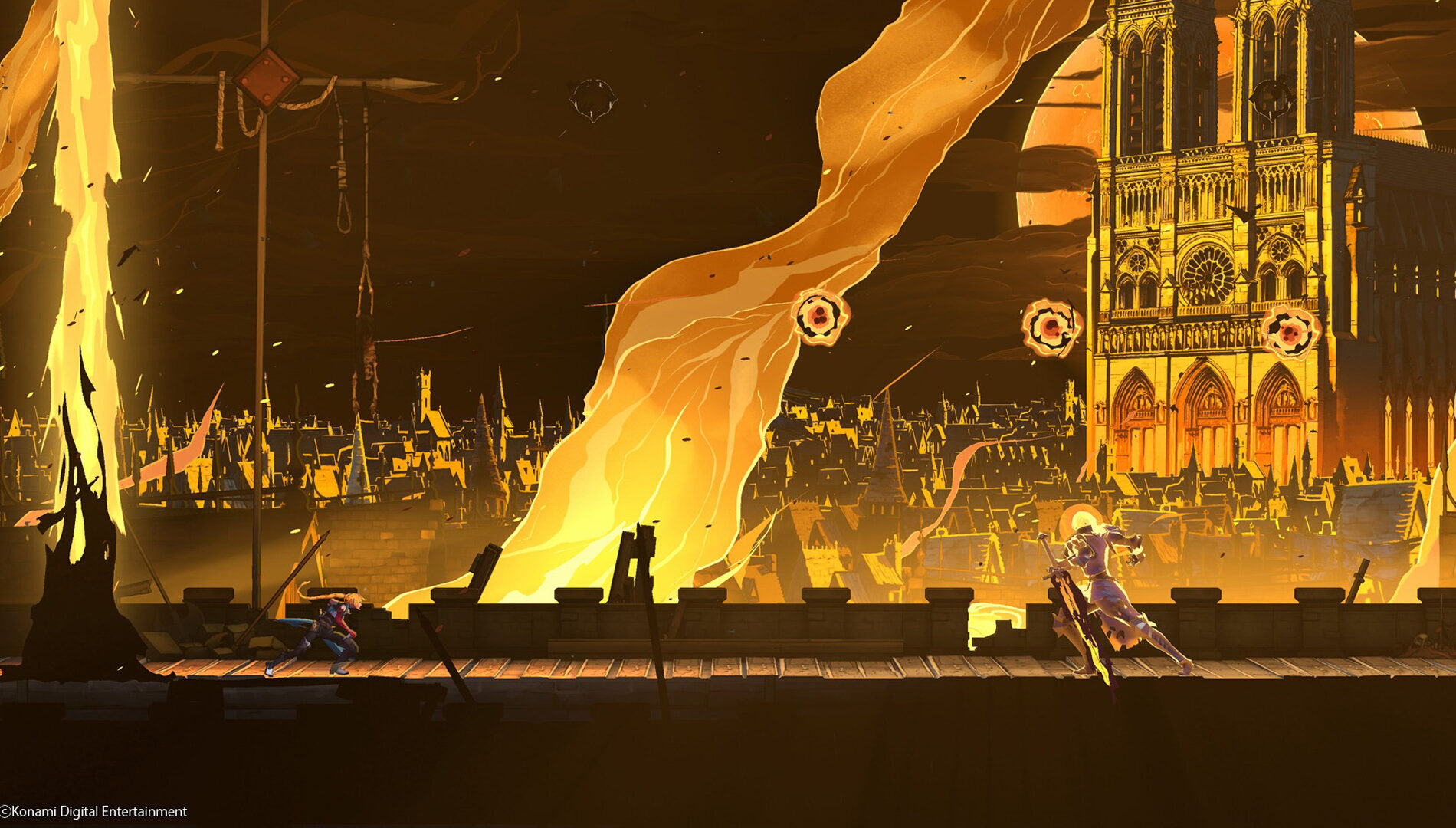
While much remains to be discovered, Nouaille is quick to point out that the version presented to us represents only a small glimpse of the full adventure: “What you’ve seen today is only the beginning of the adventure. Once you reach the castle, everything changes. We hope players will be surprised by the game’s new structure, but also by its characters, its story, and all the secrets waiting to be uncovered.”
Throughout our conversation, one idea came up repeatedly: Belmont’s Curse was never conceived as a simple tribute to Castlevania. KONAMI first defined the series’ essential foundations before allowing Evil Empire to build upon them with its own creative sensibilities. Somewhere between those two visions, a genuine partnership emerged—one that appears to have shaped every major decision throughout development.
For Emmanuel Nouaille, one particular memory perfectly captures that philosophy. It wasn’t a spectacular boss fight or a major story sequence, but something much simpler.
As development progressed, the animations, visual effects, iconic creatures, music, and sound design gradually gave the project its own identity. Yet the real turning point came when he instinctively opened the map to mark areas he knew he would revisit later after unlocking new abilities: “That’s when I realized we were no longer just testing mechanics. We were actually playing a Castlevania game.”
That same humility also defines Evil Empire’s ambitions for the franchise. The team’s goal was never to surpass landmarks such as Castlevania: Symphony of the Night, but simply to contribute a new chapter to a series that has continued to evolve for nearly four decades.
Judging by this first hands-on experience and our conversation with the developers, Belmont’s Curse appears determined to do exactly that: honour Castlevania’s legacy while confidently forging its own identity.
Castlevania: Belmont’s Curse arrives on October 15 for XBOX Series X|S and XBOX on PC.
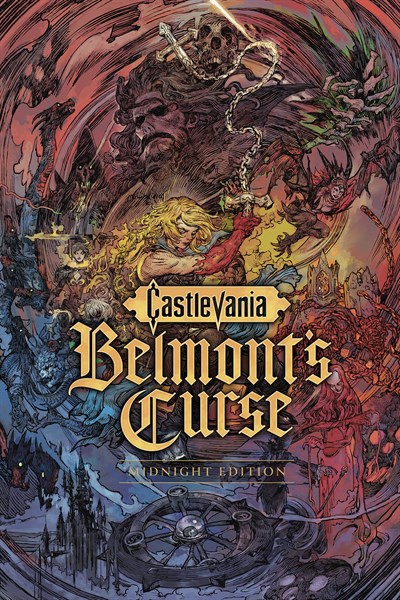

Castlevania: Belmont’s Curse Midnight Edition
KONAMI
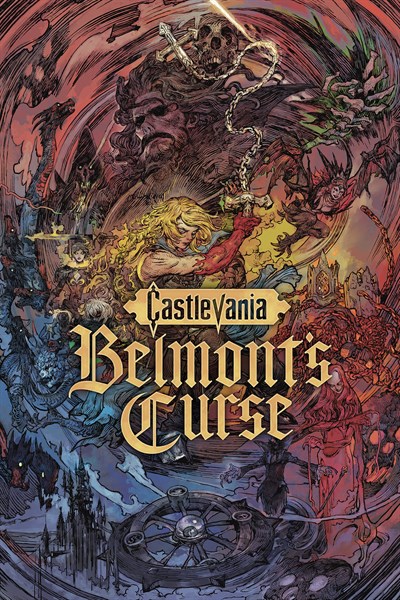
Castlevania: Belmont's Curse
KONAMI
The post Castlevania: Belmont’s Curse – How KONAMI and Evil Empire Reimagined Castlevania’s Return appeared first on XBOX Wire.
source https://news.xbox.com/en-us/2026/07/24/castlevania-belmonts-curse-xbox/
Post a Comment for "Castlevania: Belmont’s Curse – How KONAMI and Evil Empire Reimagined Castlevania’s Return"